Activities for 9-Month-Olds
At nine months, your baby communicates with intention. They point at things they want you to see, wave when people leave, and look at your face to gauge how they should feel about something new. This three-way communication — baby, parent, object — is called joint attention, and it's one of the most important cognitive skills humans develop. Your baby isn't just exploring the world anymore; they want to explore it with you.
What's Happening Right Now
🧠
Cognitive
Joint attention is the cognitive headline. Your baby points at objects and looks back at you to make sure you're looking too. They understand that you have a perspective, and they want to share theirs with you. They follow your pointing finger to look where you're indicating. They remember where objects are hidden even after a delay. Problem-solving is increasingly systematic — they'll try multiple approaches to reach a goal.
💪
Physical
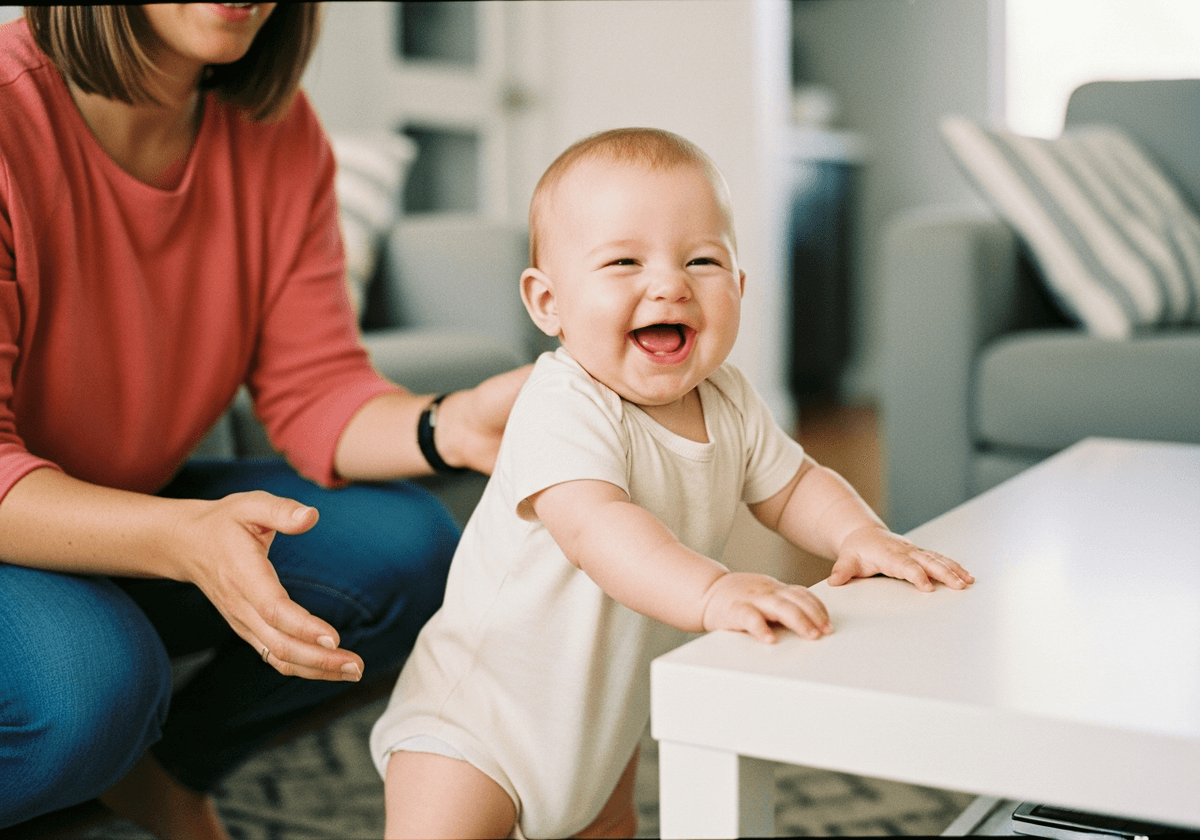
Cruising along furniture is the primary physical milestone. Your baby moves sideways holding onto couches and tables, building the balance and leg strength needed for independent walking. Some babies stand briefly without support. They climb stairs on hands and knees (going down is harder — they haven't figured that out yet). Fine motor skills are precise enough for them to pick up tiny items and release them intentionally.
❤️
Social & Emotional
Social referencing is fully operational. When your baby encounters something new — a person, a toy, a situation — they look at your face to decide how to react. If you look calm and encouraging, they'll approach. If you look worried, they'll hang back. This isn't weakness; it's sophisticated social intelligence. They also show strong preferences for specific comfort objects and routines.
⭐
What's Coming Next
Walking is approaching — some 9-month-olds are already taking first steps, though most will walk between 10 and 14 months. Language is about to explode; first meaningful words are coming. Pretend play will emerge as your baby starts using objects symbolically. You'll see more complex social behaviors: showing toys to visitors, offering food to others, and imitating multi-step activities.
Activities by Category
📚
Learning
These activities build joint attention, early categorization skills, and the communicative intent that marks a major leap in cognitive development.
🏃Physical / Motor
These activities develop cruising confidence, stair-climbing safety, and the dynamic balance that prepares your baby for independent walking.
🎨Creative / Art
These creative activities develop the pincer grasp through drawing tools, encourage intentional mark-making, and support the visual-motor integration that connects seeing with doing.
🧩Sensory
These activities build systematic exploration skills, develop fine motor precision through sensory materials, and support the focused investigation that is the foundation of scientific thinking.
👫Social
These activities develop gestural communication, build shared attention skills, and teach the social referencing that helps your baby navigate new situations.
💬Language
These activities encourage first meaningful words, build receptive vocabulary, and develop the connection between words, objects, and actions.
🎵Music
These musical activities develop coordinated rhythmic responses, encourage vocal imitation of melody, and build the social joy of making music together.
🌿Nature / Outdoor
These outdoor experiences develop mobility on natural terrain, build confidence in varied environments, and provide the open-ended exploration that drives cognitive growth.
🤍
A Note for Parents
If your baby is pointing and looking back at you, stop what you're doing and look. This joint attention moment is profoundly important — it's your baby saying 'I see something amazing and I need to share it with you.' When you respond with enthusiasm, you reinforce the most fundamental human drive: the desire to connect and communicate.
What to Expect at This Age
Nine-month-olds cruise along furniture, point at objects, and imitate gestures like waving. They understand 'no' and look for hidden toys. Activities build cruising confidence, gestural communication, and exploratory play.
Curated Activities
Ready to Plan Your Week?
Create a personalized weekly plan with activities perfect for 9 months. Track milestones, save favorites, and keep your family engaged all week long.