Activities for 6-Month-Olds
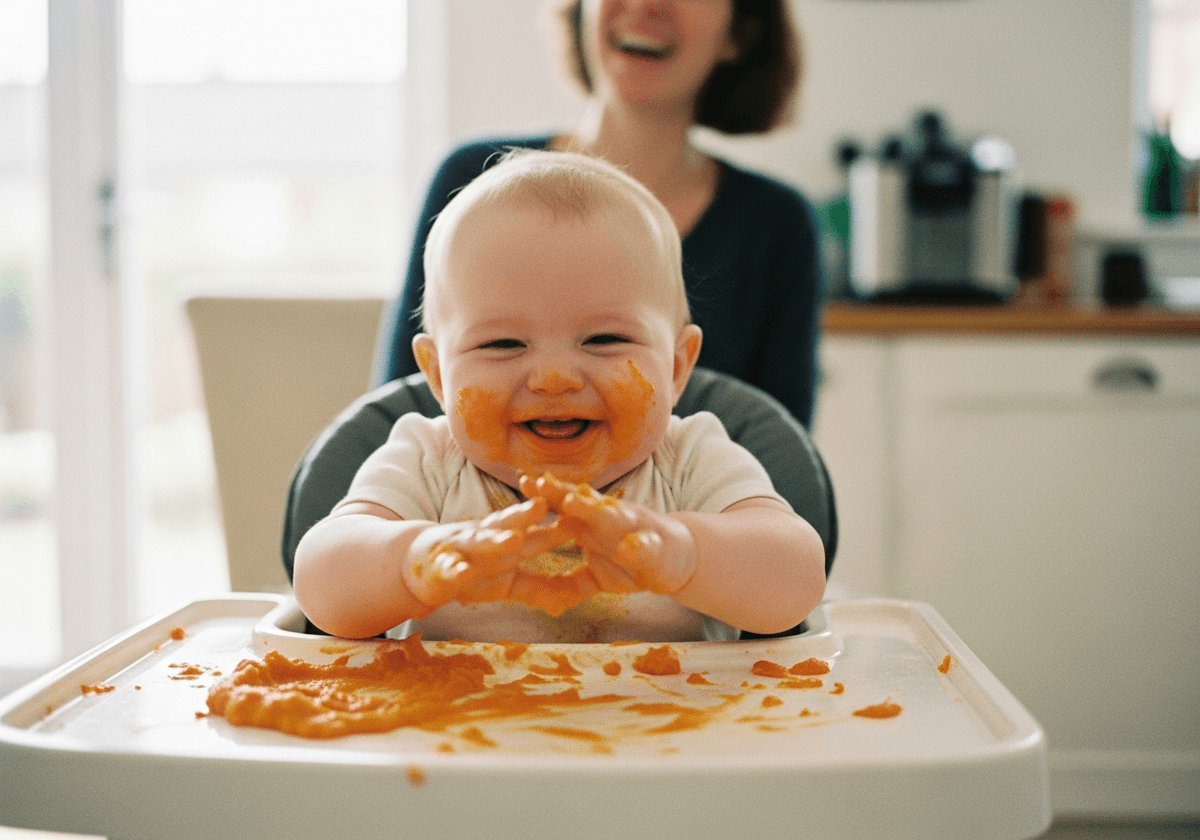
Half a year. Your baby sits independently, which is a game-changer. With both hands free and a stable upright position, the whole world opens up. This is when play gets really interesting — your baby can reach, grab, examine, shake, bang, and mouth objects with purpose and enthusiasm. You're also likely starting solid foods, which is its own sensory adventure.
What's Happening Right Now
🧠
Cognitive
Object permanence is developing rapidly. Your baby searches for hidden toys, understands that things continue to exist when out of sight, and anticipates events in familiar routines. They show early problem-solving — pulling a cloth off a hidden toy, reaching around barriers. Babbling now includes consonant-vowel combinations, and they may respond to their own name consistently.
💪
Physical
Independent sitting is the landmark achievement. Your baby sits with a straight back, reaches for toys without toppling over, and uses protective reactions (catching themselves) when they do lose balance. They may be getting on hands and knees and rocking, which is the pre-crawling warm-up. Their pincer grasp is emerging — they can pick up smaller objects between thumb and fingers.
❤️
Social & Emotional
Separation anxiety may start appearing, which feels inconvenient but is actually a cognitive milestone. Your baby understands that you're a separate person who can leave — and they don't like it. They show clear preferences for familiar people, may be anxious around strangers, and use social referencing (looking at your face for cues) to decide how to feel about new situations.
⭐
What's Coming Next
Crawling is the next big physical milestone — some babies get there at 6 months, others not until 9 or 10, and both are normal. Your baby will start pulling to stand, waving bye-bye, and using more intentional gestures. First words may emerge in the next few months. Solid foods will become more varied as your baby develops chewing skills.
Activities by Category
📚
Learning
These activities develop object permanence, early problem-solving with containers and lids, and the focused exploration that comes with stable independent sitting.
🏃Physical / Motor
These activities strengthen core stability, develop protective balance reactions, and build the upper body strength needed for crawling.
🎨Creative / Art
These creative activities develop bilateral manipulation, introduce cause-and-effect with art materials, and encourage the experimentation that is the heart of creativity.
🧩Sensory
These activities build advanced tactile exploration, introduce messy play safely, and support the sensory processing that helps your baby regulate emotions.
👫Social
These activities develop object permanence in social contexts, strengthen separation-reunion understanding, and build the secure base from which your baby explores.
💬Language
These activities encourage reduplicated babbling, support gesture-language connections, and build the phonemic awareness that leads to meaningful first words.
🎵Music
These musical activities develop intentional sound-making, rhythm coordination, and the cross-modal connections between hearing, seeing, and moving.
🌿Nature / Outdoor
These outdoor experiences develop fine motor skills through natural object manipulation, introduce early scientific observation, and provide the novel textures that build tactile intelligence.
🤍
A Note for Parents
Six months feels like a turning point because it is one. You know your baby now — their rhythms, their preferences, their personality. Trust that knowledge. If separation anxiety is hitting hard, remember: your baby cries when you leave because you're the safest person in their world. That's not a problem. That's proof you've done the first six months exactly right.
What to Expect at This Age
Six-month-olds sit independently, begin solid foods, and show increased curiosity about their surroundings. They babble consonant sounds and love peek-a-boo. Activities focus on independent sitting play, sensory exploration, and early communication.
Curated Activities
Ready to Plan Your Week?
Create a personalized weekly plan with activities perfect for 6 months. Track milestones, save favorites, and keep your family engaged all week long.