Activities for 2-Month-Olds
At two months, your baby is waking up to the world in the most literal sense. Those alert, wide-eyed periods are getting longer, and you're starting to see a real personality emerge. The social smile has arrived or is arriving soon, and it changes everything — suddenly, your baby isn't just receiving your love, they're reflecting it back.
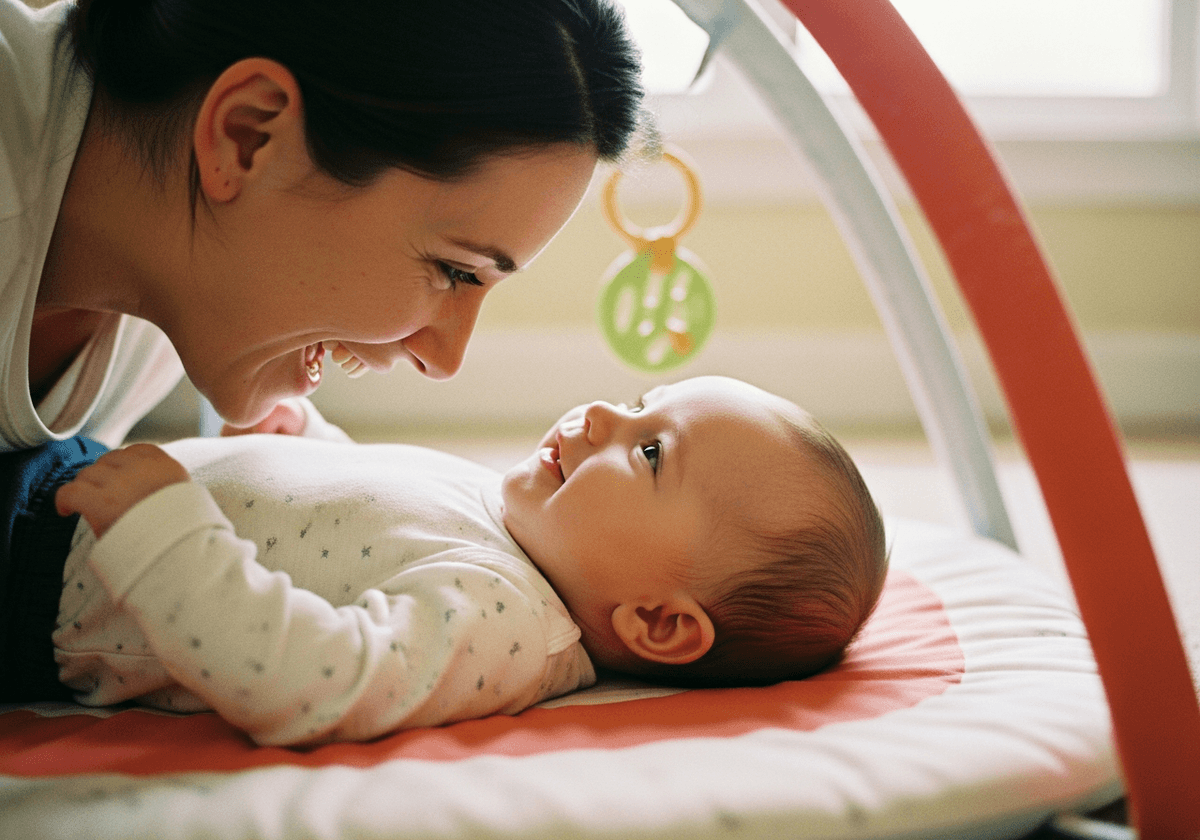
What's Happening Right Now
🧠
Cognitive
Your baby tracks moving objects with their eyes and is beginning to recognize familiar faces from several feet away. They show clear preferences — certain toys, certain songs, certain positions. They're learning that their cries produce responses, which is their very first lesson in cause and effect. When you respond consistently, you're teaching them that the world is predictable and safe.
💪
Physical
Head control is improving noticeably during tummy time. Your baby can hold their head at a 45-degree angle and may push up briefly on their forearms. Arm and leg movements are becoming smoother and more purposeful. They're starting to unfurl those tightly clenched newborn fists, which is the first step toward reaching and grasping.
❤️
Social & Emotional
The social smile is the headline milestone this month. Your baby smiles in response to your face, your voice, and playful interaction — and they mean it. They coo and make gurgling sounds, especially when you talk to them. They're learning the rhythm of human conversation: you talk, they respond, you respond back. This serve-and-return pattern is the foundation of all communication.
⭐
What's Coming Next
Over the next few weeks, expect to hear more vowel sounds and even some laughter. Your baby will start reaching for objects with purpose, bringing hands together at midline, and holding their head steady when upright. They may begin to discover their own hands — staring at them with fascination as they realize those waving things are actually theirs.
Activities by Category
📚
Learning
These activities build early cognitive skills like visual tracking, sound localization, and the beginning understanding that their actions produce results.
🏃Physical / Motor
These activities strengthen core muscles, encourage symmetrical movement, and build the upper body strength your baby needs for future milestones.
🎨Creative / Art
These visual art experiences develop focus, visual acuity, and the ability to distinguish patterns—early building blocks for creative perception.
🧩Sensory
These activities refine your baby's ability to process touch, sound, and visual information, building the sensory integration skills that support all learning.
👫Social
These activities encourage reciprocal smiling, early turn-taking in communication, and the emotional connection that forms the foundation of social intelligence.
💬Language
These activities encourage early vocalizations, build the turn-taking rhythm of conversation, and help your baby connect sounds with social interaction.
🎵Music
These musical activities strengthen auditory processing, support emotional regulation through rhythm, and encourage the vocal play that leads to speech.
🌿Nature / Outdoor
These outdoor experiences provide natural multi-sensory input, support visual development through varied distances, and introduce your baby to the rhythms of the natural world.
🤍
A Note for Parents
You're past the hardest part of the newborn fog, and things are about to get more interactive and rewarding. If your baby seems fussier in the evening, that's peak fussiness and it typically improves by 3-4 months. You're doing an incredible job — and those smiles your baby gives you? Those are earned.
What to Expect at This Age
Two-month-olds start smiling socially and tracking objects with their eyes. They coo and make gurgling sounds. Activities should provide high-contrast visuals, gentle sounds, and face-to-face interaction.
Curated Activities
Ready to Plan Your Week?
Create a personalized weekly plan with activities perfect for 2 months. Track milestones, save favorites, and keep your family engaged all week long.